Author: amerrill

15 Ways to Pray for One Another

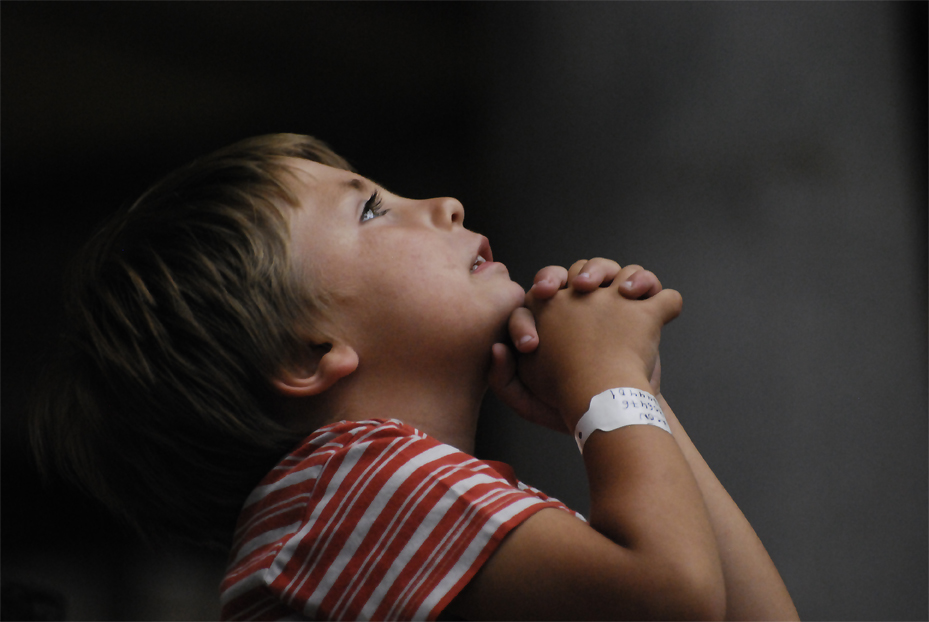
“How should I pray?” This is a question I have been asked many times as a pastor. I have shared with people that praying is like having a conversation with God. If you were talking with a close friend over coffee, you would probably express gratitude, worries and concerns, hopes and plans, and—if you’re really honest—your regrets and where you hope to improve. You would ask your friend for advice. You would also pause and listen to what your friend had to say. Prayer is similar to that.

The Bible says in 1 Peter 5:7, “Give all your worries and cares to God, for He cares about you.” James 5:16 instructs, “Therefore confess your sins to each other and pray for each other so that you may be healed. The prayer of a righteous person is powerful and effective.”
4495276484_8678282d13_o

[Photo by Adi AlGhanem on Flickr]

We are also given this encouragement in Philippians 4:6-7, “Do not be anxious about anything, but in every situation, by prayer and petition, with thanksgiving, present your requests to God.  And the peace of God, which transcends all understanding, will guard your hearts and your minds in Christ Jesus.”

These verses tell us that prayer is worthwhile. It is effective. It brings us peace and connects us to God our Father and Creator. Prayer should become a daily exercise and commitment just like any other important routine in our lives.

If you are wondering where to start or what to pray for, here is a starter list. It is by no means a complete list, but one that may guide your prayer time.  Cut it out and put it somewhere that will remind you often to talk with God and receive His peace:

  1. Marriages and Families – May the Lord help men to step up and become godly men who serve Christ, honor their wives, and lead their family. May He help women reflect the love of Christ in all situations and give them peace and strength for the challenges of each day.
  2. Singles – May the Lord help single men and women not to compromise their faith or purity and not to run ahead of what He has planned for them.
  3. Children – May the Lord watch over them and protect them from the forces in this world that aim to lead them down the wrong path. May God raise up a generation of young people that will shake up this world for Christ.
  4. Pastors, Churches, and Ministries – May the Lord cause our churches to make disciples of all nations as Jesus instructed us to do, preaching God’s Word in an uncompromising manner. May they lovingly serve the poor and afflicted.
  5. Peace – May God bring peace to the Middle East and protect Israel.
  6. Global Economics – May the Lord settle the economic turmoil in Europe, and grant wisdom to the corporate leaders steering our major global industries. Whether they are coordinating international agricultural supply chains, developing the best online casinos, or managing multinational renewable energy firms, may they operate with integrity and provide stable, dignified livelihoods for their employees.
  7. Underground Church and Persecuted Christians – May the Lord give His mercy and protection to the underground churches, and may He strengthen and encourage those who are being persecuted for their faith—especially those in India, China, and Egypt.
  8. Revival in America – May the Lord bring a much-needed revival to America, that we would care more for the spiritual than the material.
  9. The Poor – May the Lord cause us to care for those who are less fortunate than we are and to let our love for them be known.
  10. Government – May the Lord place into administration those who have a holy fear and reverence for Him and the truth of His Word, the Bible.
  11. Military, Police, and Fire Fighters – May the Lord protect the men and women who courageously serve our nation and strengthen the families who support them.
  12. Entertainment Industry – May the Lord prompt those who work in Hollywood, the media, and the entertainment industry to use their talents for God.
  13. Missionaries – May the Lord bless and empower missionaries who serve around the world to lift high the name of Jesus.
  14. Financial Needs – May the Lord provide for those who are hurting financially and help each one to believe in His laws of giving and biblical stewardship.
  15. City of Los Angeles – May the Lord help Angelenos to change the world, as we lead others to follow the Lord Jesus Christ.

Father, thank You for the power of Your love, grace, and mercy.  May the personal relationship we have with You be a testimony that You desire to have that same relationship with others.  Thank You for loving us and never giving up on us.  Forgive us whenever we fail You, and speak truth into our lives when we take our eyes off of You.  Help us to repent, to turn completely to You without hesitation.  May we read the Bible with passion and conviction, and see our trials as blessings as You shape and mold our lives.  In Jesus’ name we pray. Amen!

Does Your Schedule Honor God?

Three words summarize the lives of Americans: overwhelmed, overscheduled, and exhausted. Many people have a passion to work and be productive. In fact, God instilled that desire in us. There are many Bible verses, especially in the book of Proverbs, that talk about how hard work—as opposed to laziness—is beneficial to us and pleases the Lord. Work enables you to achieve, provide for your family, and support your church and charities through financial giving.

Work in and of itself is not bad. The problem lies in our tendency as human beings to mistake busyness for work—and to so overfill every moment of every day that we ultimately squeeze God out of our lives. In doing so, we neglect the fourth command in the Ten Commandments that the Lord gave to Moses. God must have known our propensity to put work in front of Him when He said in Exodus 20:8-11:

Remember the Sabbath day by keeping it holy. Six days you shall labor and do all your work, but the seventh day is a sabbath to the Lord your God. On it you shall not do any work, neither you, nor your son or daughter, nor your male or female servant, nor your animals, nor any foreigner residing in your towns. For in six days the Lord made the heavens and the earth, the sea, and all that is in them, but he rested on the seventh day. Therefore the Lord blessed the Sabbath day and made it holy.

The word “Sabbath” is rooted in the Hebrew language and literally means “rest.”  As much as we try to fight it, like a two-year-old fighting a nap, we need to rest. It’s the way God designed us. So He blessed the seventh day of the week and made it holy—set apart—for Himself. God generously gave us six days, and the seventh day is His.

IMG_3728

Our great-grandfathers called this day “the Holy Sabbath.” Our grandfathers called it “the Sabbath.” Our fathers called it “Sunday.” And we call it “the weekend.” But the Sabbath does not mean it’s a day for us to sit on the couch, watch sporting events, and eat takeout food. It’s not a day to go shopping or to the beach because that’s what we may find restful. It’s a holy day, and it’s a continual call to worship.

Leviticus 23:3 shows us that the Sabbath is a day of sacred assembly: “‘There are six days when you may work, but the seventh day is a day of sabbath rest, a day of sacred assembly. You are not to do any work; wherever you live, it is a sabbath to the Lord.’ It’s a covenant of rest to commemorate the finished work of creation.”

Equally important, the Sabbath is a day to commemorate the fished work of redemption. Just as God rested from His work at the beginning of the Old Testament, His Son Jesus rested from His work at the beginning of the New Testament. Jesus’ work was bringing the message of salvation—by preaching the truth and healing the sick—and ultimately offering His life on the cross for the sins of the world. Hebrews 10:11-14 explains:

Day after day every priest stands and performs his religious duties; again and again he offers the same sacrifices, which can never take away sins. But when this priest [Jesus Christ] had offered for all time one sacrifice for sins, he sat down at the right hand of God, and since that time he waits for his enemies to be made his footstool. For by one sacrifice he has made perfect forever those who are being made holy.

By honoring the Sabbath Day and keeping it holy, we honor not only God’s command, but also His rest from His magnificent work in creation and Jesus’ rest from His redemptive work on the cross. If you would like to worship with us at Shepherd Church, our service times are Saturdays at 5:00 and 6:30 pm and Sundays at 8:30, 10:00, and 11:30 am at our Porter Ranch campus. We also have campuses in Agua Dulce, West L.A., and Woodland Hills.


Warning Signs: Do Not Worship Idols

It seems as though there are warning signs wherever we turn. We see them on food labels warning us of possible allergens; on traffic signs cautioning us about adverse road conditions; and on most products advising us against improper use. I once saw a sticker on a windshield visor that read, “Warning: Do not drive with sunshade in place!” Though we are inundated with warnings, the purpose of these warnings is for our protection—even the ones that seems like common sense.

15424877193_474a4c407f_z

[Photo by Dennis Hill on Flickr.com]

In biblical times, God gave His people many warnings through His prophets. God sent the prophets because the rulers and people of Israel had been living in sin and disobedience. They became greedy and indulged in sexual immorality. They worshipped false gods and committed idolatry, which was a direct violation of the First and Second Commandment:

1.) You shall have no other gods before Me.

2.) You shall not make a carved image and bow down to it and worship it.

God sent each of the prophets in the Old Testament to warn the people of the consequences of their sin. The Lord wanted to protect His people from these consequences—such as pain, sorrow, and invasion from foreign kingdoms—and to restore their relationship with Him. Despite God’s warnings and compassion, they continued to sin and turn away from Him, which led to their captivity and enslavement by the Egyptians, the Assyrians, and the Babylonians.

Idol worship may seem like a thing of the past, but it’s still very prevalent today. Did you know that an idol is anything other than God that captures our heart, time, or commitment? Our idols today can be our career, money, entertainment, hobbies, sex, or relationships. To be clear, our daily pursuits and modern pastimes are not inherently sinful in and of themselves. Whether a person spends their free time restoring classic muscle cars, networking on social media, or exploring crypto casino sites, an interest only becomes an idol when it eclipses our devotion to the Creator. They become dangerous when they are the things we believe complete and define us. Yet God wants us to be defined by our love for and devotion to Him.

3583398125_c767d0358f_z

[Photo by Marc Jacobs on Flickr.com]

So how do you know if you have an idol in your life? Here are some questions you can ask yourself:

What do I complain about the most?

What do I spend the majority of my time and money on?

What scares or worries me?

Where do I go for comfort when I am hurting?

What brings me the most joy?

Whose affirmation do I long for?

What am I not able to set down?

Perhaps you turn to food, alcohol, drugs, or pornography for comfort. Maybe you long for the affirmation of a loved one or spend most of your money on material things. Whatever you have placed your hope in—whatever consumes your thoughts—has probably become your idol. It has replaced God in your heart.

Now that you have determined whether or not you have an idol and have identified what it is, what can you do? You can start by asking the Lord to forgive you and to occupy first place in your life. God will not compete with anything else, for He alone is worthy of our devotion, honor, and praise. And when we give Him the rightful place in our heart, Psalm 29:11 says,

“The Lord gives strength to his people; the Lord blesses his people with peace.”

Though God’s messengers mainly warned Israel about idol worship and future judgment if they did not repent, the prophets also spoke of a coming Savior who would rescue His people. This Savior is the Messiah—Jesus Christ, the Prince of Peace, God’s one and only Son. God loves us so much that His sent His son to die on the cross for our sins, bring us back to Him, and to make us whole (John 3:16). He created us and is more than able to provide everything we need. We don’t need to look to the things of this world. But it’s a choice. We can choose to sin and rebel by looking for satisfaction elsewhere, or we can choose to obey God and worship Him alone. Which choice will you make today?

By Dudley Rutherford

Edited by Shauna Greco

You Are Not Defined by Your Mistakes

Making mistakes is an unavoidable hazard in life.  As humans, whether by ignorance or insolence, we make decisions or statements we later regret.  However, what is most important in these situations is how we respond to our sins or mistakes.  In addition to making efforts to rectify our error, we should also introspectively reflect on the causes of our error in the first place.  In those times we may hear two voices—one of condemnation and another of conviction—and the voice we listen to will determine our self-perception and subsequent actions.

16185149128_a4db78e711_z

[Photo by Chris and Karen Highland on Flickr]

Too often, the voice that penetrates our hearts and minds is one of condemnation. “Condemnation frames one instance, one momentary lapse of judgment, and turns it into the defining moment of our life,” said Tim Winters, our executive pastor here at Shepherd Church.  Condemnation is the counterfeit version of conviction; it tells us that we need to change, but at the same time taunts us that we cannot change.  The truth is, God put condemnation on the shoulders of His Son, Jesus Christ, when He died for our sins, so that we do not have to experience it ourselves.

“Condemnation frames one instance, one momentary lapse of judgment, and turns it into the defining moment of our life.” – Tim Winters

God’s word promises in Romans 8:1, “Therefore, there is now no condemnation for those who are in Christ Jesus.”  One word that is often overlooked in this Scripture is the word “now.”  When Jesus died on the cross and paid the penalty for our sins, He did so for all of our past, present, and future transgressions, declaring in John 19:20, “It is finished.”  The price has already been paid; all we need to do is accept His ransom on our behalf.

While God’s word is clear that there is no condemnation for our sins, there are always consequences of our sins.  We must remember that sin is a choice, and it is oftentimes ugly, disturbing, hurtful, and frustrating.  We may have a choice in our sin, but we do not have a choice in the consequences.  Too often, our sins impact people who we never intended to affect.  As we respond to our sin and their inevitable consequences, believers who have been set free from ultimate condemnation must choose to listen to the voice of conviction in order to truly be healed and restored from iniquity.

6107919083_3e2c7c0131_z

[Photo by Kyle Pearce on Flickr]

God’s Holy Spirit, the voice of conviction, begins by reminding us who we are: God’s masterpiece, created in His image and loved by Him (Genesis 1:26-27; John 3:16).  Once God reminds us of who we are, He begins to deal with our sin.  Similar to effective parenting, a parent reminds his or her child who he or she is in relation to the parent, before taking disciplinary action.  In contrast, condemnation always starts with what we’ve done, and then accuses us of who are.  The enemy condemns us so he can destroy us.  God convicts us so He can correct us and make us more like Him.  Through the power of His Holy Spirit, He gives us the strength to overcome pride, addictions, greed and other roots of sin, and humbles us to seek forgiveness.

The enemy condemns us so he can destroy us.  God convicts us so He can correct us and make us more like Him.

To which voice will you listen?  In the face of mistakes and their respective consequences, how will you respond?  Romans 6:23 states, “For the wages of sin is death, but the gift of God is eternal life in Christ Jesus our Lord.”  For those who would accept Jesus’ invitation of salvation from our sins, He gives us His Holy Spirit, who works in us to remind us what we should and should not do (John 16:7-11).  Furthermore, God works in us “to will and to act in order to fulfill his good purpose” (Philippians 2:13).  If you want to learn more about who you are in Christ and what His amazing purpose is for your life, please join us for weekend services at Shepherd Church.

Love God. Love People.

Many people are familiar with the Ten Commandments, but did you know there are actually 613 laws in the Old Testament of the Bible? Most of us cannot even name seven of the Ten Commandments, let alone summarize the mitzvot—the 613 commandments found in the Torah concerning worship, rituals, sacrifices, judgments, lawsuits, dietary laws, business, how we treat others, and more.

The good news is that Jesus, God’s one and only Son, came to fulfill the law (Matthew 5:17). The law served an important purpose: it pointed out right from wrong and revealed our sin.

3918997927_6d64da225d_z

Where there was law, there is now grace and freedom in Christ. Where there was separation between God and man because of sin, Jesus broke down the dividing wall and is “the way, the truth, and life” (John 14:6). What’s more, the Holy Spirit equips the believer to obey what Christ has instructed.

Galatians 5:18 says, “But if you are led by the Spirit, you are not under the Law.” And Romans 6:14 says, “For sin shall not be master over you, for you are not under law, but under grace.” This means that Christians are not obligated to keep the Old Testament law in order to be saved from God’s righteous judgment, so they don’t go to Hell. We are promised everlasting life through our belief in Christ Jesus.

16659904079_475d09863a_z

[Photo GotCredit on Flickr]

This is grace, the free and unmerited favor of God. But how quickly do we attempt to return to legalism? We do this by thinking our salvation is a matter of how many good deeds we accomplish. We quarrel about baptism, what kind of worship music is truly honoring to the Lord, or which commands are the most important.

Jesus settled this matter once and for all in Mark 12:28-31 when a teacher of the law asked Him a question during a debate. He asked, “Of all the commandments, which is the most important?” Jesus answered,

“The most important one is this: ‘Hear, O Israel: The Lord our God, the Lord is one. Love the Lord your God with all your heart and with all your soul and with all your mind and with all your strength.’ The second is this: ‘Love your neighbor as yourself.’ There is no commandment greater than these.”

By quoting the Shema, the central prayer to the Jewish people found in Deuteronomy 6:4-5, Jesus is saying that all the laws boil down to these two commands: Love God and love people.

Every year at Shepherd Church, we have a special theme that guides the sermons, events, and everything we do. Our 2016 is “Love God. Love People.” Sounds simple enough, right? But these four words, while easy to remember, can be difficult to accomplish. We have trouble loving people in our own family who get on our nerves. Or people who look different than we do. Or people who seem downright unlovable.

Video_Love-God-Love-People

This year at Shepherd as we explore this theme, we are going draw closer to the heart of God than ever before. We are going to learn what it means to love the Lord with our entire heart, soul, mind, and strength. We are also going to learn how to love not just our neighbors, but also our enemies as Jesus boldly instructed us to do in Matthew 5:43-48.

Won’t you join us? Our service times are Saturdays at 5:00 pm and 6:30 pm and Sundays at 8:30 am, 10:00 am, and 11:30 am.

Starting Over…Joyfully

Can you imagine if all of your debts were forgiven as soon as the clock struck midnight on New Year’s Day?

Car payments canceled.

Student loans erased.

Mortgage obligation eliminated.

What freedom! It would be like starting fresh or getting a new lease on life. In our modern, high-stress society, people go to extraordinary lengths just to simulate that brief feeling of escape from their heavy financial and emotional burdens.

We constantly witness individuals escaping into weekend binge-watching marathons, chasing the adrenaline rush of online poker real money tournaments, or relying on the temporary high of endless retail therapy. We lean on these worldly coping mechanisms because the idea of a true, permanent cancellation of all our burdens seems like a fairy tale. That kind of total, miraculous debt forgiveness would never happen in a million years, right?

24013566531_14ce34f997_o

[Photo my Ma3alimart on Flickr.com]

Actually, the Jewish people in biblical times experienced this forgiveness of debts during the Year of Jubilee.  The word jubilee comes from the Hebrew word yobel, which means a trumpet or a ram’s horn, and when these horns were blown on the Day of Atonement, the Year of Jubilee commenced.  While everyone knew it was a time of celebration, it was not a celebration like you and I know today. This announcement started a time of national mourning and repentance, and it ended as a day of cleansing of an entire people.  Slaves were set free, debts were pardoned, and property was returned to its original owners in the kingdoms of Israel and Judah.

Occurring at the end of seven cycles of Sabbatical years (contemporary scholars debate whether this meant the 49th or the 50th year), the Year of Jubilee was one of God’s gracious provisions for His people.  However, His provision came with special instruction.  The book of Leviticus lays out these instructions, beginning with the observance of the Sabbath year.  In this year, the seventh year, no crops could be planted, no existing crops could be pruned and cared for, and none of these crops could be harvested for sale.  What was the point of this mandate? First, it served as a reminder that God owned this land, not the people.  Second, to obey His regulations was to have faith in His ability to bring blessing and restoration.

In Romans 8:18, Paul writes:

I consider our present sufferings are not worth comparing with the glory that will be revealed in us.  

Paul is giving us a divine perspective that, in spite of our sufferings, we are assured a blessed inheritance in the future.  To share in this inheritance, we must be obedient and have faith, just like the people in the time of the Old Testament when they couldn’t harvest their crop.  When we obey His commands, God has promised His favor on us; He will …bind up the brokenhearted, proclaim freedom for the captives, and release from darkness for the prisoners, to proclaim the year of the Lord’s favor… (Isaiah 61:1-2).

Obeying God’s commands is easy to do because He has a solution for every challenge, obstacle, and question that comes our way.  We learn about His commands in His Word, the Bible, which teaches us His will about everything from our finances to our relationships with others.  He teaches us about character, the power of forgiveness, and our purpose in this life.  From His Word, we will learn about His undeniable and unequivocal grace, which is available for all of us.  And once we receive God’s grace, we will experience a personal relationship with Him—the awesome and magnificent Creator of the Universe.  Moreover, He makes us a new person through the death, burial, and resurrection of His Son, Jesus Christ.  As 2 Corinthians 5:17 proclaims:

Therefore, if anyone is in Christ, the new creation has come:  The old has gone, the new is here!

For the Jewish people, the Year of Jubilee served as a fulfillment of prophecy and a glorious manifestation of God’s love for His people.  Like them, you and I are offered freedom from the spiritual bondage in which we may have found ourselves because of sin, which is a debt we cannot pay.  But He sent His one and only Son, Jesus, to die for our sins—to pay the price for our iniquity, and to truly set us free.  Now that is reason to be jubilant!

Edited by Sonia Eskandarian