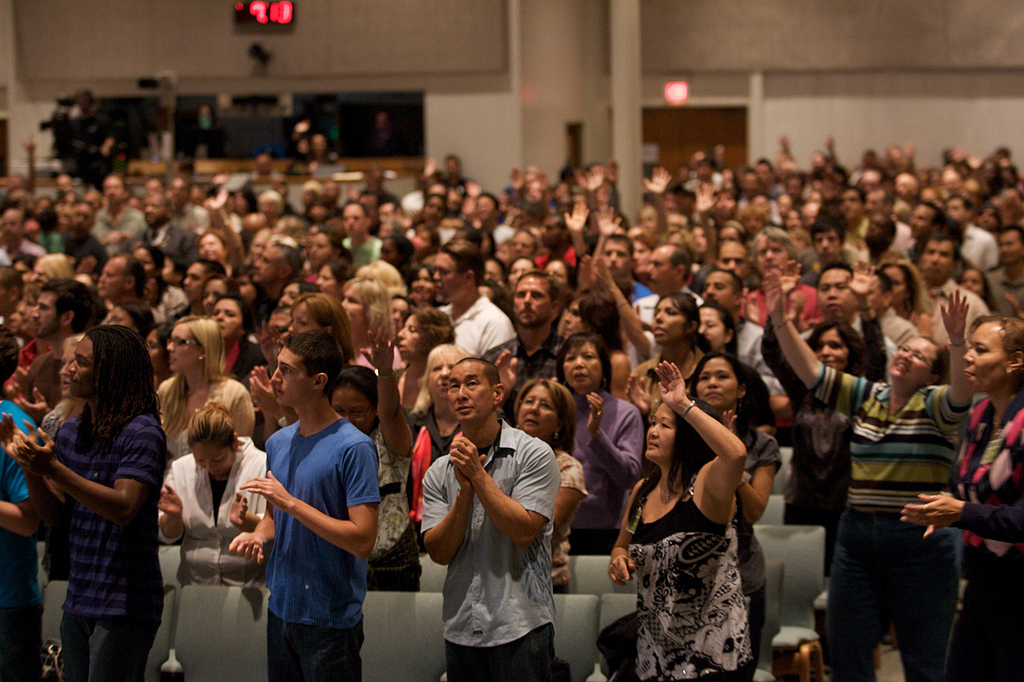
Three Things that are Eternal

There’s an old expression that “all good things must come to an end.” But whether good or bad, everything in life is temporary. Seasons change. Cars break down. Houses eventually become dilapidated. Fabric tears and gets worn out. Metal rusts. Our bodies, though remarkably resilient, are also quite fragile and inevitably succumb to mortality. Careers conclude and relationships dissolve. Is there anything in this universe that we can count on to last forever?

The Bible says in Isaiah 51:6 and Hebrews 1:10-12 that even the heavens and the Earth will perish—they will “wear out like a garment.” While that may be discouraging news for some, we can be encouraged by three things that will never spoil, perish, vanish, or fade—and in these we can place our complete hope and trust.

First, is the Word of God.

The Bible has withstood attack, ridicule, criticism, and many attempts to destroy it over the centuries. Voltaire, an 18th century French philosopher and historian, once predicted, “One hundred years from today, the Bible will be a forgotten book.” Many have forgotten Voltaire, as well as this quote; however, no one has forgotten the Bible.

In 16th century England, William Tyndale translated the New Testament from Greek to English for the first time in 1525, during a period of great persecution in Europe. Catholic authorities forbade the translation and distribution of the Bible in English (cf. Decree of the Council of Toulouse 1229 AD; Ruling of the Council of Tarragona of 1234 AD; Proclamations at the Ecumenical Council of Constance 1415 AD). Any Bible found violating these rulings were burned, but Tyndale believed all people should be able to read the Bible in their own language. After being tried and convicted for treason and heresy for printing and distributing Bibles, Tyndale was burned at the stake in 1536. Because of people like Tyndale throughout history, today the Bible has been translated into nearly 3,000 languages!

Despite every attempt to eradicate it, the Bible today is the world’s best-selling and most widely distributed book. In the last 50 years, 3.9 billion copies of the Bible have been sold. Just as Isaiah 40:8 and 1 Peter 1:24-25 declare, “The grass withers and the flowers fall, but the word of our God endures forever.”

The second thing that is eternal is the soul of man.

The Bible says in Psalm 139:13-16 and Jeremiah 1:5 that God forms us in our mother’s womb—that He knows us even before we were born. Our time on earth is but a mist or a vapor (James 4:14) and our spirit will eventually return to God who gave it (Ecclesiastes 12:7). The soul is precious and has a destination beyond this world. Jesus said in Mark 8:36, “What good is it for someone to gain the whole world, yet forfeit their soul?”

In John 5:28-29, Jesus made this stunning revelation: “Do not be amazed at this, for a time is coming when all who are in their graves will hear his voice and come out—those who have done what is good will rise to live, and those who have done what is evil will rise to be condemned.” And we know from John 3:16 that God loved the world so much that He gave His one and only Son—that whoever believes in Him, would not perish but have eternal life.

The third thing that is eternal is the love of God.

God’s love endures forever and ever (Psalm 136:1-26). We learn from Romans 8:28 “…that in all things God works for the good of those who love him, who have been called according to his purpose.” And quite possibly the most astonishing verse about God’s love comes from Romans 8:38-39, which says, “For I am convinced that neither death nor life, neither angels nor demons, neither the present nor the future, nor any powers, neither height nor depth, nor anything else in all creation, will be able to separate us from the love of God that is in Christ Jesus our Lord.”

Nothing can separate God’s love from those who love, revere, and serve Him! If you would like to learn more about God’s love—and the “Certainty of Eternity,” our theme for 2018—please join us at Shepherd Church for weekend services.

 

The Promise of Eternity

Have you ever broken a promise to someone? Has someone ever broken their promise to you? The sad reality is that human beings make and break promises all the time.

“I’ll be there, I promise.”

“I promise to love you always, for better or for worse.”

“I promise never to do that again.”

“I’ll take you there someday, I promise.”

Unfortunately, every broken promise makes us more and more skeptical because broken promises equals broken trust. We have to be careful not to allow this skepticism to cross over into our relationship with God. The Lord God Almighty is the ultimate promise maker and promise keeper. While we are sometimes powerless to keep our promises—because we lack the resources, commitment, control over unforeseen circumstances, or recollection of what we’ve said—God has the power to do what He has said He will do.

In the Bible, we find more than 3,000 promises of God. And the truly amazing thing is that God keeps all of His promises. In Luke 21:33, He declares, “Heaven and earth will pass away, but my words will never pass away.”

Jesus Christ is the fulfillment of God’s promises. In 2 Corinthians 1:20, we learn: “For no matter how many promises God has made, they are ‘Yes’ in Christ. And so through him the ‘Amen’ is spoken by us to the glory of God.” As one biblical commentary states, Jesus is the fulfillment of God’s promises because He is the sum and the substance of them!

The promises of God can be places in one of three categories.

First are His transformational promises.

In Ezekiel 36:26, God promises to take the heart of stone from His people and replace it with a heart of flesh—stone representing stubbornness and disobedience, and flesh representing a tenderness and an eagerness to do the will of God. In 2 Corinthians 5:17, God promises that anyone who is in Christ (who loves, follows, and believes in Him) is a new creation—“the old has gone, the new is here!” God promises to change us for the better and for His glory.

Second are His provisional promises.

God promises to provide many good things to His people: protection and victory, wisdom and peace, and the gift of the Holy Spirit…just to name a few. (See Psalms 20:4 and 61:3; Acts 1:8 and 2:38; John 14:27 and 16:13; Matthew 6:30 and 17:20). In fact, one of God’s names in the Bible is “Jehovah Jireh,” which means “The Lord will provide” (Genesis 22:8). God is the awesome provider of all our needs, both physical and spiritual.

Third are God’s triumphal promises.

In 1 John 1:9, we are promised victory over sin. In Galatians 2:20, we are promised victory over self. James 1:13-18 promises us victory over temptation, and Isaiah 41:10 as well as many other Scriptures in the Bible promise us victory over fear.

One of God’s most breath-taking promises is the promise of eternity. Ecclesiastes 3:11b reveals, “He has also set eternity in the human heart; yet no one can fathom what God has done from beginning to end.” Have you ever wondered why many people feel there is something else beyond this life? It’s because God has planted eternity in our heart! John 3:16 proclaims, “For God so loved the world that He gave His one and only Son, that whoever believes in Him will not perish but have eternal life.” This is echoed by 1 John 2:25, which says, “And this is what he promised us—eternal life.”

If you would like to know more about God’s promises and how to spend eternity with Him, please join us for weekend services at Shepherd Church at one of our four campuses—Agua Dulce, Porter Ranch, Westside, and West Valley. Please visit www.theshepherd.org for more information on service times and locations.


A Picture of Heaven

From the beginning of time, people young and old have wondered what Heaven will be like. Is Heaven real? If so, what does it look like? Who will be there? What will we do there? Thankfully, we find the answers to these questions in God’s Holy Word. The last two chapters of the last book of the Bible, Revelation, have more to say about Heaven than the rest of the entire Bible.

Revelation 21:5 declares, “He [God] who was seated on the throne said, ‘I am making everything new!’ Then he said, ‘Write this down, for these words are trustworthy and true.’”

Here is what we learn about Heaven from Revelation 21 and 22:

The splendor, size, and structure of Heaven

Heaven is beyond anything we could ever imagine (1 Corinthians 2:9), but we get a picture of its magnificence from Revelation 21:11-12, which says, “It shone with the glory of God, and its brilliance was like that of a very precious jewel, like a jasper, clear as crystal. It had a great, high wall with twelve gates, and with twelve angels at the gates.”

This new city is about 1500 x 1500 miles long. (For reference, the city of Los Angeles is 22 x 22 miles long.) “The wall was made of jasper, and the city of pure gold, as pure as glass. The foundations of the city walls were decorated with every kind of precious stone… The twelve gates were twelve pearls, each gate made of a single pearl. The great street of the city was of gold, as pure as transparent glass” (Revelation 21:11-21).

Isn’t it amazing to know that God has reserved the most precious and beautiful materials for our heavenly home? He truly has spared no expense for the wondrous place He is preparing for those who love Him.

Who will be in Heaven?

We learn from Revelation 21:3 that God Himself will be in Heaven. “Look! God’s dwelling place is now among the people, and he will dwell with them. They will be his people, and God himself will be with them and be their God.” Just like in the Garden of Eden before the fall of man, God will once again live and walk among His beloved people. Revelation 22:4 says God’s servants “will see his face, and his name will be on their foreheads.”

We also learn from Revelation 21:7 that “those who are victorious” will inherit the new Heaven and be children of God. Who are these victorious ones? We learn from Scriptures such as Matthew 10:22 and Romans 8:4-6 that they are the people who have put their trust in Jesus Christ, followed His ways, lived according to the Spirit and not the flesh, and endured trials until the very end.

What will NOT be in Heaven?

The Bible reveals that there will be no tears, death, or disease in Heaven. Revelation 21:4 says, “He will wipe every tear from their eyes. There will be no more death or mourning or crying or pain, for the old order of things has passed away.”

Revelation 21:8 makes it clear that sinners and evil will not be found in Heaven either. “But the cowardly, the unbelieving, the vile, the murderers, the sexually immoral, those who practice magic arts, the idolaters and all liars—they will be consigned to the fiery lake of burning sulfur. This is the second death.”

Every heartache, every tear, and every pain in our body is a reminder that this world is not our true home (Hebrews 13:14; 1 Peter 2:11). Each story of crime, corruption, evil, and injustice you hear about on the news is a reminder that this world is fallen due to sin. “No longer will there be any curse. The throne of God and of the Lamb will be in the city, and his servants will serve him” Revelation 22:3. I’m looking forward to that great day, aren’t you?


Why Is There So Much Suffering in the World?

As a pastor, I’ve had many people ask me why there is so much suffering in the world. It seems that on any given day, we can peruse the news and hear about one senseless tragedy after another—shootings, natural disasters, political corruption, crime, and death. These trials occur on a personal level as well. Perhaps right now you are grappling with a divorce, bad news from a doctor, or losing something or someone important to you. Hardship and loss care not about a person’s color, culture, gender, age, class, or culture. We all are susceptible to different kinds of trouble in our lifetime.

So what do we do when we encounter inevitable hardships?

Whenever a person is sitting across from me with teary eyes, a broken heart, and deep questions, I’m keenly aware that suffering is not easy to explain. But I try to encourage that person not to ask God, “Why is this happening to me?” but instead, “How can I respond in a way that is honoring to You, Lord?”

Here are a few ways we can adopt this kind of response:

1. Fear God and shun evil.

Proverbs 9:10 says, “The fear of the LORD is the beginning of wisdom, and knowledge of the Holy One is understanding.” It’s important that we are equipped with wisdom whenever we are facing unexpected challenges, and the way to glean wisdom is first by fearing—or, in other words, “revering”—God.

In the Bible, there is a man named Job who is one of the greatest survivors of tragedy the world has ever seen. The Bible says in Job 1:1, “This man was blameless and upright; he feared God and shunned evil.” Job was a very wealthy man who had seven sons and three daughters, thousands of livestock, and numerous servants. One day, he is suddenly catapulted into a season of great testing, spearheaded by Satan himself (Job 2:3-7). Job lost his fortune, family, health, and reputation in one fell swoop. But look at Job’s response to his calamity: “‘Naked I came from my mother’s womb, and naked I will depart. The Lord gave and the Lord has taken away; may the name of the Lord be praised.’ In all this, Job did not sin by charging God with wrongdoing” (Job 1:21-22). Job’s immense reverence for the Lord and his holy habit of shunning evil is what allowed him to praise God (instead of blame God) during such terrible times.

2. Remember where God is.

My dear friend, Dr. Jerry Taylor of Abilene Christian University, recently came to Shepherd Church and preached on 1 Corinthians 6:18-20. Verse 19 gives us an amazing response to the question of where God is in the midst of tragedy: “Do you not know that your bodies are temples of the Holy Spirit, who is in you, whom you have received from God?”

Regarding this passage of Scripture, Dr. Taylor said, “The Holy Spirit resides in you. I’m glad to know that God is not in some distant realm separated and isolated from His people who live in this present world. Yes, God is beyond the azure blue, but He is also residing in you! He is in outer space, but He also occupies your inner space.” God resides in each and every believer of Jesus Christ and wants us to be His hands and feet, and His love and compassion, in all situations.

3. Don’t lose hope.

No matter how dark or how bleak a tragic event or difficult season might be, never ever lose hope. The Book of 1 Peter is a letter written by the Apostle Peter to Christians in the first century who were facing intense persecution. The letter begins in verse three and four, not with fearfulness or complaining or commiserating, but with praise! Peter wrote, “Praise be to the God and Father of our Lord Jesus Christ! In his great mercy he has given us new birth into a living hope through the resurrection of Jesus Christ from the dead, and into an inheritance that can never perish, spoil or fade. This inheritance is kept in heaven for you…”

Believers are reminded that, no matter what we may endure, we having a living hope in Jesus Christ, and the ultimate hope of receiving an inheritance—which is an eternity spend in Heaven with Him.

Trials can test and mature us, and they can strengthen our faith. While we may not always understand human suffering of God’s plan, we can take comfort in the truth that God is good. He is just. He is light. He is love. And He is near.

Three Things to Hold on to in the Middle of the Storm

Life has its peaks and valleys, its hardships and troubles. If you are going through a difficult time, or are feeling like a stranger in the world, you will find great comfort in the book of 1 Peter in the New Testament of the Bible. It is a letter that the apostle Peter wrote to believers in the first century who were being persecuted for their faith. From this letter, we can garner three reliable, unfailing, and immensely encouraging things we can hold on to in the midst of a storm.

First, you have the Bible.

It’s your life jacket in the storm when the wind and waves beat against you. In 1 Peter 1:1-2, we are encouraged as believers that no matter what happens—no matter how we are mistreated or maligned—to “lay aside all malice, all deceit, hypocrisy, envy, and all evil speaking,” and to love God’s Word, the Bible, which we need to grow in our faith and character.  In other words: don’t mistreat others who mistreat you; don’t quit your faith; and keep growing! Knowing and cherishing the Word of God teaches us these truths, especially in times of trouble.

Second, you have Jesus.

Come what may, Jesus Christ is the solid rock to which we cling. Verse four in Peter’s letter tell us that He is the living stone, chosen and precious.  He is also the chief cornerstone upon which the entire Church is built, and He is immovable. Lastly, verses seven and eight explain that Jesus is a stumbling stone to those who reject Him. To further explain this Scripture, allow me to share a quick analogy…

If you were backpacking through the wilderness, what would you do if you encountered a massive rock—at least 12 feet high and 10 feet wide—in the middle of your path? It depends on your heart and your perspective. Some people might look upon that stone and rejoice that they have found something true and solid, sturdy and strong, that can provide shelter or protection from the elements. Other people might encounter that stone and be offended by it because it blocked or challenged their course. It’s the same with Jesus Christ. To believers, He is the living stone and the corner stone of our faith, and we rejoice in Him. Others are offended by Him, and reject and disobey His Word.

Third, you have a royal family.

Verses nine and 10 in Peter’s epistle explain that we are not alone in this life because “…you are a chosen generation, a royal priesthood, a holy nation, His own special people.” What an honor to be called such things by Almighty God! And since He considers us chosen, royal, and holy, what is required of us? What is our purpose? Verse 9b reveals, “that you may proclaim the praises of Him who called you out of darkness into His marvelous light.” Our purpose is to declare God’s praise! We are to be holy, which means “set apart” from the culture, because we have obtained God’s wonderful mercy (verse 10b).

In the middle of life’s storms, I hope you hold dear to your heart that you have the Bible, Jesus, and a royal family. The biggest takeaway from this awesome passage in 1 Peter, is this: if you have Jesus, you have everything you need. He is our ever-present hope, and He is mighty to save! Please join us at Shepherd Church at one of our four campuses as we study God’s Word and grow closer to Jesus Christ together.

Diversity in the Church: Christ’s Love for All

One way that Christians can demonstrate their love for Christ is by how they love people—all kinds of people.  Not just those who look like us or speak our language, but also those who come from different social and cultural backgrounds.  According to Ed Stetzer, a Christian pastor and missiologist, diverse churches remain rare.  He said, “Everybody wants diversity, but many don’t want to be around people who are different.”

The early Christian churches were diverse on multiple levels, which fulfilled the words of the prophet Isaiah, which Jesus Christ quoted in Mark 11:17,

“Is it not written, ‘My house shall be called a house of prayer for all the nations?’”

The Apostle Paul personally experienced the abundant diversity in the church of Antioch, where for the first time Jewish and Gentile Christians worshiped God together as equals (Acts 11:19-26).

It is good to remember that underneath our varied cultural heritage, personal preferences, political views, and economic backgrounds, we all share the oneness of being a child of God.  As Christians we are charged to connect to all peoples of all cultures.  As believers, we have been united with Christ through salvation.  All of those who are one with Jesus Christ are one with each other.  Paul writes in Galatians 3:28, “In Christ, there is neither Jew nor Greek, there is neither slave nor free, there is neither male nor female; for you are all one in Christ Jesus.” 

World travel, increased immigration, and modern technology have brought us closer to peoples from all over the world.  As believers, we need to get rid of the fear and anxiety that separate us from one another.  Through faith in Jesus Christ we are no longer “strangers and foreigners, but fellow citizens with the saints, and members of the household of God…” (Ephesians 2:19).

Where there is diverse membership, the church benefits from the perspectives and gifts each racial, cultural, and socio-economic group offers.  A church that represents all the colors of the rainbow gets to enjoy the beauty of that rainbow.

Our church should be a gathering of people radiantly living the command from Jesus when He said,

“A new commandment I give to you, that you love one another; as I have loved you, that you also love one another.  By this all will know that you are My disciples, if you have love for one another.”  (John 13:34-35)

Christ’s love extended to all kinds of people—the rich, the poor, the sick, Gentiles, Samaritans, the lovable, the despicable.  Christ’s love must motivate and compel us to extend the same love to others. As His disciples, we are to follow His example.  Our walk and our attitude should resemble our Master’s walk.

Revelation 7:9 provides a forecast of the diversity that will be present in Heaven:“After these things I looked, and behold, a great multitude which no one could number of all nations, tribes, peoples, and tongues, standing before the throne and before the Lamb, clothed with white robes, with palm branches in their hands, and crying out with a loud voice, saying, ‘Salvation belongs to our God who sits on the throne, and to the Lamb.”

I look forward to that great and wonderful day. But in the meantime, let us prepare our hearts by encouraging and celebrating diversity today!

Edited by Carmencita F. Davino, Ph.D.